California Privacy Fence Laws: 2026 Guide to Height & Fire Rules
In the complex landscape of California real estate, the physical boundaries that define private life are governed by an intricate web of statutory mandates, case law, and evolving environmental regulations. California Privacy Fence Laws. The modern California homeowner or land manager must navigate a dual reality: the traditional “Good Neighbor” etiquette of the 20th century and the high-stakes, safety-driven requirements of the 21st. Far from being a simple matter of height and material, the laws governing privacy fencing in the Golden State reflect broader shifts in societal values, ranging from the equitable sharing of costs to the critical necessity of wildfire mitigation.
Current legal dynamics in California emphasize “Systemic Responsibility.” Gone are the days when a property owner could unilaterally dictate the terms of a boundary. Today, every inch of fencing is subject to a hierarchy of governance that begins with state-wide civil codes and filters down through municipal zoning ordinances and Homeowners Association (HOA) covenants. This article serves as a definitive reference for those seeking to understand the intersection of property rights, privacy expectations, and the increasingly rigid safety standards of the California landscape.
As we move deeper into 2026, new regulations—particularly those concerning “ember-resistant” zones—are fundamentally altering the material choices and placement strategies for residential boundaries. Understanding these shifts is not merely a matter of legal compliance; it is a prerequisite for protecting property value and ensuring long-term domestic tranquility.
Understanding “California Privacy Fence Laws”
The term California Privacy Fence Laws refers to a collection of civil statutes and local building codes that prioritize the “presumption of mutual benefit.” A common misunderstanding in the California market is the belief that a landowner has an absolute right to build whatever they desire on their own property line. In reality, California Civil Code § 841, also known as the Good Neighbor Fence Act, establishes that adjoining landowners are “presumed to share an equal benefit” from a fence that divides their properties. This creates a baseline requirement for shared financial responsibility and mutual consultation that overrides unilateral property-line decisions.
Beyond the equity of costs, California laws are defined by a strict “Height-to-Intent” ratio. While many municipalities allow for a six-foot privacy fence as a matter of course, any structure exceeding seven feet typically triggers the requirement for a building permit and structural engineering review. This is not merely a bureaucratic hurdle; it is a safety mechanism designed to account for seismic activity and wind-load pressures unique to the California climate. Furthermore, the state’s “Spite Fence” statute (Civil Code § 841.4) provides a critical check on malicious intent, labeling any fence over ten feet that is erected solely to annoy or injure a neighbor as a “private nuisance” subject to legal remedy.
Finally, we must address the “Zone 0” paradigm shift. As of 2026, California’s Board of Forestry and Fire Protection has implemented rigorous standards for “ember-resistant” zones. In many high-fire-threat districts, the traditional wooden privacy fence is now prohibited within five feet of any structure. This represents a fundamental conflict between traditional privacy aesthetics and modern safety survivalism. A fence that was perfectly legal in 2020 may now be a non-compliant fire hazard, requiring the homeowner to pivot to non-combustible materials like masonry, aluminum, or composite materials that meet the strict ignition-resistant requirements of the state fire marshal.
Deep Contextual Background: The Evolution of Boundary Equity
The history of California boundary law is a transition from “Frontier Autonomy” to “Civil Integration.” In the early days of the state, fencing was primarily a tool for livestock management, following the “open range” philosophies of the era. However, as California transformed into a suburban and urban powerhouse, the function of the fence shifted from keeping things in to keeping things out.
The modern era of fencing law was solidified with the 2013 update to the Good Neighbor Fence Act. This legislation was a response to decades of “boundary wars” where one neighbor would build a fence and demand payment from the other without prior notice or agreement. The law institutionalized a 30-day notice period, requiring transparency in costs and intent. This shift signaled that the state viewed the residential perimeter not as an extension of an individual’s will, but as a shared piece of infrastructure critical to neighborhood stability.
Conceptual Frameworks for California Fencing Compliance
Navigating California’s fencing landscape requires specific mental models that prioritize long-term legal and physical durability.
1. The “Presumption of Mutual Benefit” Framework
This is the foundational logic of the Good Neighbor Fence Act.
-
The Logic: Both neighbors benefit equally from privacy, security, and the marking of the boundary. Therefore, both should pay equally for construction and maintenance.
-
Limit: This presumption can be overcome if one neighbor can prove the cost is “unjust” or “excessive” based on their financial circumstances or if the fence serves the aesthetic whims of only one party.
2. The “Ember-Path” Mental Model
This framework focuses on the fence as a physical conduit for disaster.
-
The Logic: A wooden fence is essentially a “wick” that leads a wildfire directly to the eaves of a house. In high-risk zones, the fence must be viewed through the lens of thermal resistance rather than just visual privacy.
-
Limit: This framework is geographically restricted to “State Responsibility Areas” and high-fire-threat districts, though it is increasingly being adopted by municipal codes statewide.
3. The “Permit-Threshold” Model
A mathematical approach to construction timing.
-
The Logic: In California, 6 feet is the standard “free-build” height. 7 feet requires a permit. 10 feet triggers the “Spite Fence” liability.
-
Limit: Front-yard setbacks often have lower thresholds, typically restricted to 3 or 4 feet to ensure sightlines for traffic safety.
Key Categories: Statutory Heights and Material Modalities
California fence regulations categorize structures based on their location on the lot and their potential impact on the public right-of-way.
Table: California Residential Fencing Standards (Typical)
| Location | Max Height (No Permit) | Material Restrictions | Primary Legal Concern |
| Rear Yard | 6 Feet | None (Standard) | Neighbor Equity |
| Side Yard | 6 Feet | None (Standard) | Boundary Accuracy |
| Front Yard | 3-4 Feet | Transparent/Open | Traffic Sightlines |
| Zone 0 (Fire) | 5 Feet (Proximity) | Non-Combustible | Wildfire Mitigation |
| Coastal Zone | Varies | Local Coastal Plan (LCP) | Public View Preservation |
Detailed Real-World Scenarios California Privacy Fence Laws
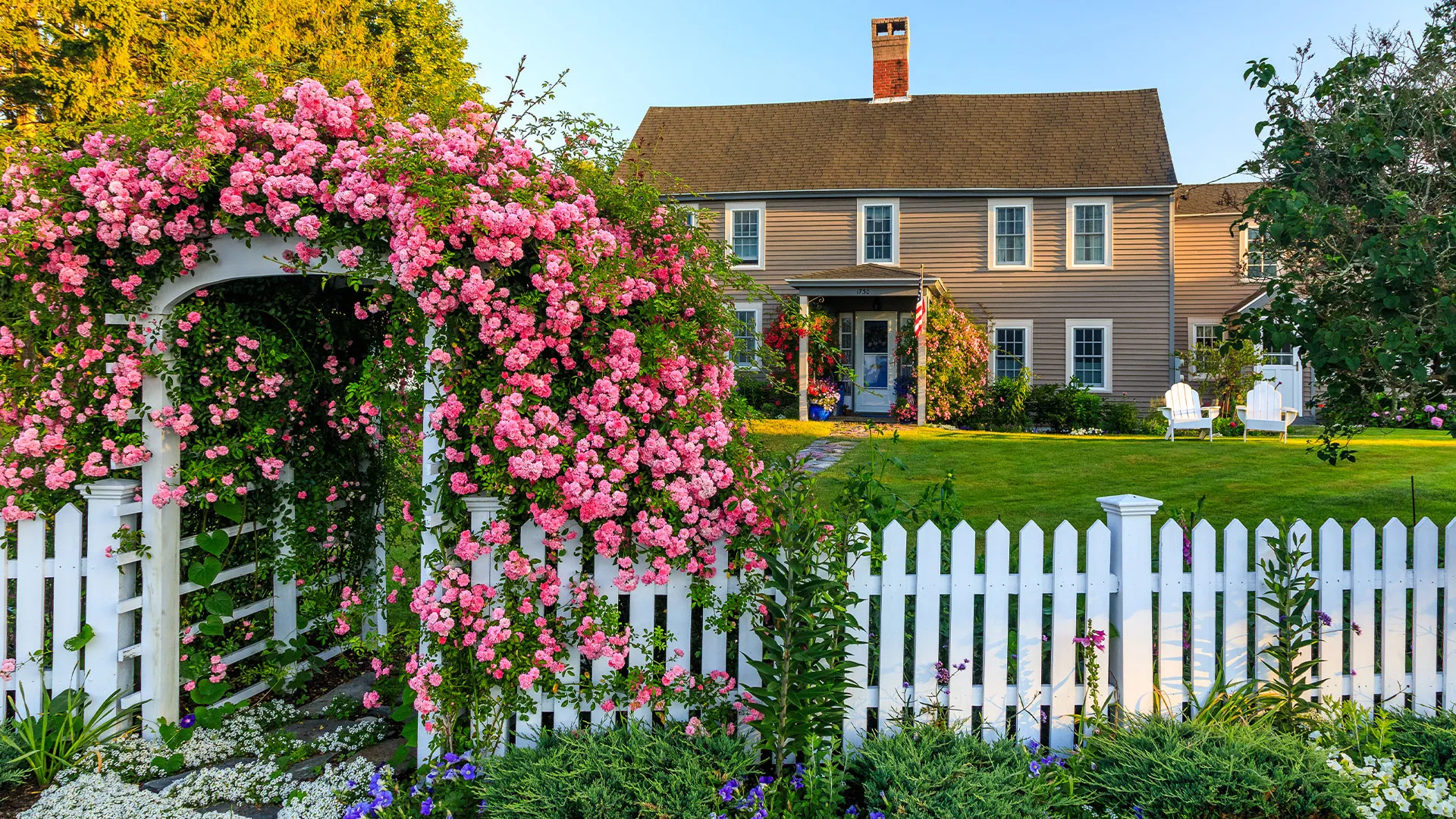
Scenario A: The “Zone 0” Retrofit (Sierra Foothills)
A homeowner with a 20-year-old redwood fence wants to replace it. The fence connects directly to the side of the house.
-
The Conflict: The homeowner prefers wood for aesthetics, but the property is in a high-fire-risk zone.
-
Decision Point: Under 2026 standards, the first five feet of the fence where it meets the structure must be non-combustible (e.g., metal or masonry).
-
Failure Mode: Installing a full wood fence leads to a citation during a fire-safety inspection and a potential cancellation of homeowner’s insurance.
Scenario B: The “Aesthetic Spite” Dispute (Los Angeles)
A neighbor builds an 11-foot-tall “trellis” that functions as a fence, blocking the primary sunlight to the neighbor’s pool.
-
The Conflict: The builder claims it is a “garden structure,” not a fence, to bypass the 6-foot limit.
-
Legal Pivot: California courts have ruled that “structures in the nature of a fence” (including trees or trellises) fall under the Spite Fence statute.
-
Outcome: The court orders the structure lowered to 10 feet or less, finding that the “malicious intent” to block light outweighs the builder’s property rights.
Planning, Cost, and Resource Dynamics
The economic logic of California Privacy Fence Laws is a shift from “Individual Cost” to “Shared Investment.”
Range-Based Investment Table (100 Linear Feet)
| Activity | Standard Privacy (Wood) | Premium Composite/Metal | Masonry/Fire-Resistant |
| Notice & Legal | $100 | $100 | $500 (Eng. Review) |
| Materials | $2,500 | $5,500 | $12,000 |
| Labor/Install | $2,000 | $3,500 | $8,000 |
| Permit Fees | $0 | $0 – $300 | $500+ |
| Total Est. Cost | $4,600 | $9,400 | $21,000+ |
Risk Landscape and Failure Modes
The primary risks in California fencing are not structural, but legal and regulatory.
-
Notice Failure: Starting construction without the 30-day written notice required by Code § 841. This often forfeits the builder’s right to seek reimbursement from the neighbor.
-
Encroachment: Mistakenly placing the fence two inches over the property line. In California, “adverse possession” is difficult to prove, but an encroachment can cloud the title during a future sale.
-
HCP/Coastal Violations: In “Coastal Zones” or “Environmentally Sensitive Habitat Areas” (ESHA), a fence that blocks wildlife corridors or public views can trigger massive fines from the California Coastal Commission.
Governance, Maintenance, and Long-Term Adaptation
A privacy fence in California is a kinetic asset that requires a documented lifecycle plan to avoid future disputes.
The “Good Neighbor” Review Cycle
-
Annual Inspection: Check for soil erosion around posts. In California’s “Atmospheric River” events, sudden saturation can cause fence lines to lean, creating a liability if the fence falls onto a neighbor’s vehicle or landscaping.
-
5-Year Re-Staining: For wood fences, maintaining the finish is a shared responsibility. If one neighbor refuses to allow access for maintenance, it may be necessary to mediate through an HOA or local ombudsman.
-
Adjustment Triggers: Any change in property ownership should trigger a “Boundary Estoppel” agreement where the new owner acknowledges the existing fence location and cost-sharing history.
Common Misconceptions and Industry Myths
-
Myth: “The fence has to be exactly on the property line.” Correction: While ideal, “Boundary Fences” are often slightly offset. The law focuses on the function and intent rather than the mathematical precision of the center-line.
-
Myth: “If my neighbor didn’t pay for the fence, I own both sides.” Correction: If it is a boundary fence, California law presumes shared benefit. Even if you paid 100%, the neighbor still has a say in how the side facing their yard is treated.
-
Myth: “I can build an 8-foot fence if it has 2 feet of lattice.” Correction: Most California cities measure the total height of the structure. Lattice is not a legal “bypass” for height limits unless explicitly stated in the local zoning code.
Conclusion: The Future of the Protected Perimeter
The evolution of California’s boundary laws is ultimately a journey toward “Contextual Compliance.” As we have seen, the intersection of the Good Neighbor Fence Act and modern fire-safety mandates has created a landscape where the fence is no longer just a wall, but a sophisticated piece of civic infrastructure. The transition from “Privacy at any cost” to “Privacy with resilience” is the defining challenge for property owners in the 2020s.
For the California resident, the path forward is clear: success is found in transparency and engineering. By respecting the 30-day notice period, adhering to fire-resistant material standards, and staying within municipal height thresholds, homeowners can ensure that their perimeter remains a source of security rather than a catalyst for litigation. In the Golden State, the “good neighbor” is the one who understands that the strongest fences are built on a foundation of shared law and mutual safety.