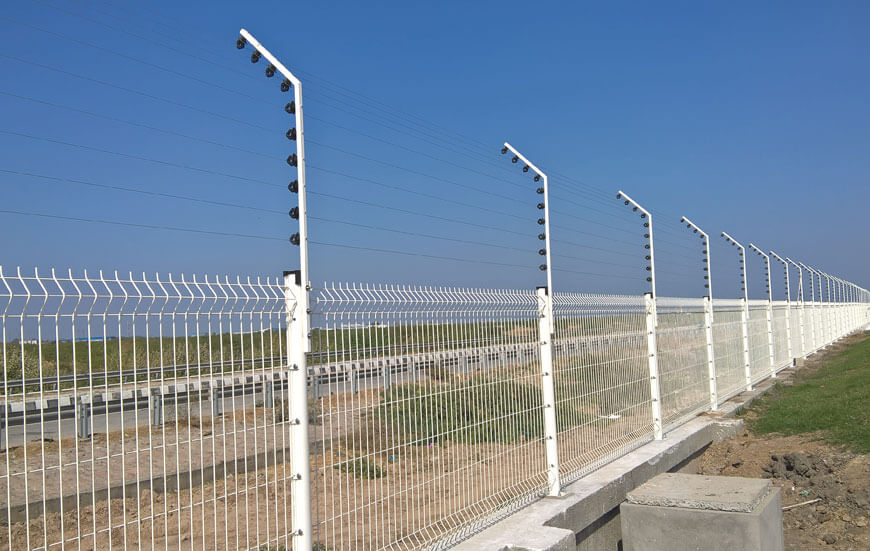
How to Avoid Smart Fencing False Alarms: A Senior Editorial Guide
The primary adversary of any automated security or containment system is not the intruder, but the “false positive.” In the specialized world of intelligent boundaries, a false alarm—a “nuisance alarm” in technical parlance—is more than a minor annoyance; it is a systemic threat to the integrity of the perimeter. How to Avoid Smart Fencing False Alarms. When a smart fence repeatedly triggers without cause, the human operator inevitably undergoes “alarm fatigue,” a psychological state where the urgency of the alert is devalued. Eventually, the system is either ignored, silenced, or de-coupled, rendering the capital investment worthless and the property vulnerable.
Achieving a high-fidelity perimeter requires an intimate understanding of the environmental variables that masquerade as security breaches. Every smart fence, whether it utilizes vibration sensors on a physical mesh or GPS geofencing via satellite, is essentially a translator. It must interpret raw kinetic or electromagnetic data and decide, in milliseconds, if that data represents a legitimate event or background noise. The difficulty lies in the fact that the physical world is inherently chaotic: wind gusts, wildlife, falling branches, and even heavy rainfall all generate signals that can, to an uncalibrated sensor, look remarkably like a human climber or a runaway animal.
To address this, the property owner must move beyond the “install and activate” mindset. Managing a smart perimeter is an exercise in signal processing and environmental governance. It involves the precise tuning of sensitivity thresholds, the strategic placement of hardware to minimize interference, and the implementation of multi-modal verification—using two or more different sensor types to confirm an event before an alarm is raised. This article explores the deep technical and operational strategies required to refine these systems, moving from a state of constant, erroneous alerting to one of silent, reliable vigilance.
How to Avoid Smart Fencing False Alarms
The central challenge of how to avoid smart fencing false alarms lies in the “Sensitivity-Reliability Paradox.” If a sensor is tuned to be highly sensitive, it will detect every legitimate breach but will also trigger for every passing truck or heavy gust of wind. Conversely, if it is tuned to be too “dull,” it will ignore the environment but may fail to detect a slow, methodical climb or a subtle geofence drift. Resolving this requires a transition from binary detection to “pattern recognition,” where the software looks for the specific frequency or movement signature of the target subject rather than just a raw increase in signal amplitude.
In a GPS-based system, for instance, a false alarm is often the result of “multipath interference”—where satellite signals bounce off a nearby metal shed or a thick tree canopy before reaching the receiver. The receiver calculates an incorrect position, causing the system to believe the subject has crossed the boundary when they are actually stationary. Avoiding this necessitates “Signal Masking” or “Digital Smoothing,” where the software is instructed to ignore momentary leaps in position that are physically impossible for the subject to have achieved.
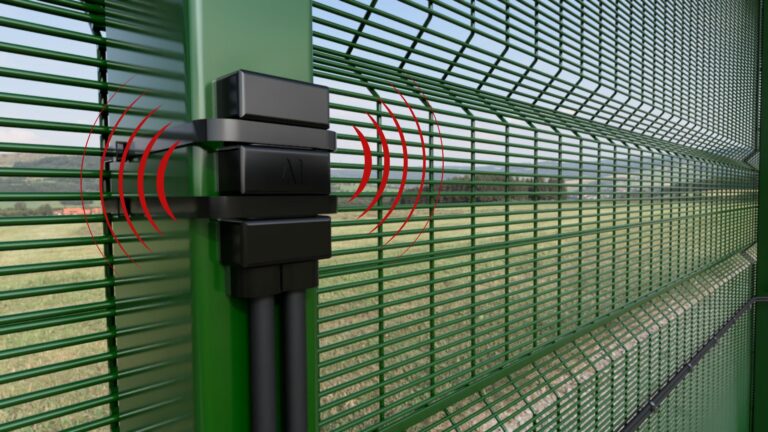
For physical fences equipped with vibration sensors, the strategy shifts toward “Environmental Baseline Calibration.” This involves recording the background noise of the property during various weather conditions and teaching the system to subtract that noise from the real-time data. A smart system should be able to distinguish between the distributed, low-frequency vibration caused by wind across the entire fence fabric and the localized, high-frequency impact of a wire-cutter or a foot in a mesh link.
Deep Contextual Background: The Industrialization of Detection
The history of perimeter security is a steady march away from mechanical triggers. The original “invisible” fences were simple induction loops that lacked any intelligence; they delivered a correction regardless of whether the subject was approaching at a run or merely leaning against a post. As we moved into the 2010s, the introduction of microprocessors allowed for the first wave of “filtered” detection. However, these early filters were often rudimentary, relying on simple timers—if the signal lasted more than X seconds, trigger the alarm.
Today, we are in the era of “Edge Computing” and “Signal Signature Analysis.” Modern hardware can analyze the waveform of a vibration. A branch hitting a fence has a sharp “attack” and a long, echoing “decay.” A human hand grasping a fence creates a series of rhythmic, low-amplitude shifts. By moving the processing power to the sensor itself, we can filter out the branch before the alarm even reaches the central controller. This systemic evolution has turned the fence from a “tripwire” into an “ear,” capable of hearing the difference between the environment and a threat.
Conceptual Frameworks and Mental Models
To effectively calibrate a system, one should utilize specific engineering mental models to categorize and eliminate noise.
1. The Multi-Modal Verification Framework
Never trust a single sensor. If a vibration sensor triggers, the system should “cross-check” with a secondary modality, such as a microwave barrier or a thermal camera, before escalating to a full alarm.
-
Limit: This adds significant cost and technical complexity to the installation.
2. The Time-and-Persistence Model
This model posits that legitimate breaches are rarely instantaneous. By requiring a signal to persist for a specific duration (e.g., 500 milliseconds) or to repeat with a specific frequency (rhythmic climbing), the system can ignore “transient” noise like a bird landing on the wire.
-
Limit: Excessive delays can give an intruder or a runaway animal enough time to clear the physical barrier.
3. The Geofence “Buffer” Model
Instead of a single line, a smart fence should have an “Outer Warning Zone” and an “Inner Action Zone.” False alarms are reduced by allowing for “Signal Drift” within the warning zone without triggering a correction or a high-priority alert.
Hardware Modalities and Their Nuisance Profiles
Every sensor type has a “kryptonite”—a specific environmental factor that is most likely to cause a false positive.
1. Fiber-Optic Acoustic Sensors
These cables detect vibrations along the fence line.
-
Nuisance Profile: High winds and heavy rain. The sound of rain hitting the fence can saturate the fiber’s dynamic range.
-
Mitigation: Frequency-domain filtering to ignore the “white noise” of rain.
2. GPS / GNSS Geofencing
Satellite-based containment.
-
Nuisance Profile: “GPS Drift” near buildings or under dense foliage.
-
Mitigation: Dual-band (L1/L5) receivers that provide higher precision and better resistance to signal reflection.
3. Microwave / Active Infrared Barriers
Beams that trigger when broken.
-
Nuisance Profile: Wildlife (deer, birds) and blowing debris (tumbleweeds).
-
Mitigation: “Stacking” beams; an alarm only triggers if the top and bottom beams are broken simultaneously, indicating a human-sized object.
Comparison Table: Sensor Vulnerabilities
| Sensor Type | Primary Nuisance Source | False Alarm Risk | Best Use Case |
| Vibration (Coax) | Wind / Traffic | High | Solid Ground, High Security |
| Fiber Optic | Heavy Precipitation | Moderate | Long Perimeters |
| GPS Geofence | Metal Structures | Moderate | Large, Open Acreage |
| Microwave | Small Animals | Moderate | Clear Line-of-Sight Paths |
| PIR (Thermal) | Rapid Temp Changes | Low | Controlled Entry Points |
Detailed Real-World Scenarios How to Avoid Smart Fencing False Alarms
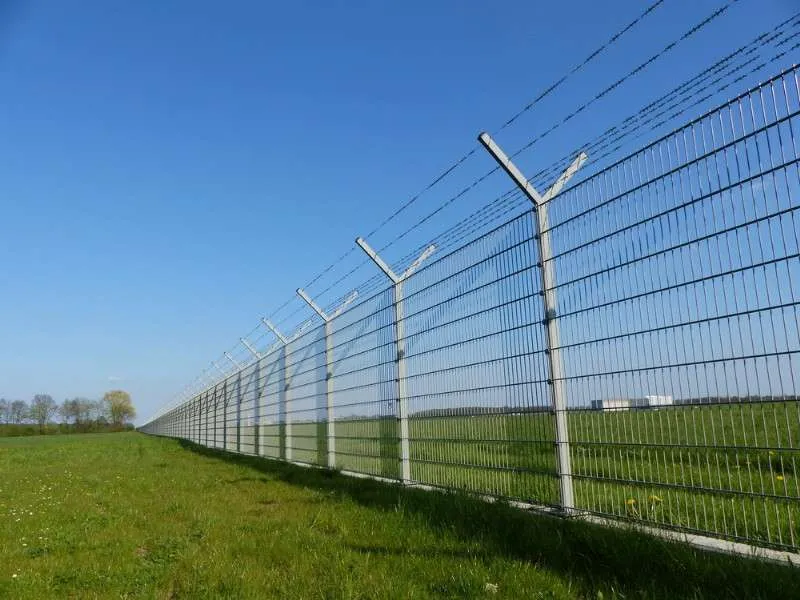
The strategy for how to avoid smart fencing false alarms must be adapted to the specific topography and climate of the site.
Scenario A: The High-Traffic Urban Perimeter
A business located near a heavy rail line or a busy trucking route.
-
The Conflict: Ground-borne vibrations mimic the signal of a fence breach.
-
The Solution: “Differential Sensing.” A sensor is placed on the fence and another is buried in the ground nearby. The system “subtracts” the ground vibration from the fence vibration, leaving only the signal unique to the fence itself.
Scenario B: The Coastal Estate
High winds and salt-laden air.
-
The Conflict: Wind causing “fence rattle” and salt corrosion leading to electrical “ghosting” in the sensors.
-
The Solution: Using non-metallic fiber optic sensors and applying “Wind Compensation” software that dynamically raises the alarm threshold during high-wind events.
The Economics of Error: Cost and Resource Dynamics
The cost of a false alarm is not zero. In a commercial setting, it involves security personnel time and potential “false alarm fines” from local law enforcement. In a residential or agricultural setting, it involves the stress of the owner and the potential “over-correction” of the animals.
Estimated Costs of System Calibration
| Activity | Direct Cost | Indirect Cost | Long-Term Benefit |
| Initial Tuning | $500 – $1,500 | 10 Hours Labor | 80% Reduction in NAR |
| Secondary Sensor | $200 – $1,000 | Integration Time | “Zero-False” Threshold |
| Firmware Updates | $0 (Usually) | 2 Hours / Month | AI Pattern Improvement |
| Physical Hardening | $100 – $500 | Manual Labor | Reduced Mechanical Noise |
Risk Landscape: The Compounding Nature of Alarm Fatigue
The ultimate failure mode of a smart fence is not a technical glitch, but a human one. “Nuisance Alarm Rate” (NAR) is the metric that determines the lifespan of a security system.
-
The Desensitization Loop: False alarm occurs -> Human investigates -> Nothing found. Repeat 10 times. Human stops investigating.
-
The “Silent Breach” Risk: A legitimate intruder or escape attempt occurs during an environmental event (like a storm), and the owner ignores the alert, assuming it is just the wind.
-
The “Check-Engine Light” Effect: If the system is constantly in a state of alarm, the hardware itself undergoes unnecessary stress (solenoids firing, lights flashing), leading to premature mechanical failure.
Governance, Maintenance, and Long-Term Adaptation
A smart fence is a living system. What is a “clean” signal in the winter may be a “noisy” one in the summer as foliage grows and interacts with the fence mesh.
The Reliability Checklist
-
Monthly: Walk the perimeter and look for “mechanical noise”—loose slats, sagging mesh, or branches touching the wire.
-
Quarterly: Review the “Alarm Logs.” Identify “hotspots” where alarms trigger frequently and adjust the sensitivity of only those specific zones.
-
Seasonally: Recalibrate for weather. Raise thresholds in the spring (wind/rain) and lower them in the winter (calm/clear).
-
Technological: Ensure the “Edge AI” models are updated. Manufacturers frequently release “Signature Libraries” that help the system recognize new types of noise.
Measurement and Evaluation: Data-Driven Calibration
To manage the system, you must quantify the “Signal-to-Noise” performance.
-
Leading Indicator: “Nuisance Alarm Rate (NAR).” Total false alarms per week. A healthy system should aim for < 1 per week per kilometer.
-
Lagging Indicator: “Probability of Detection (PD).” Does the system catch 100% of intentional “test breaches”?
-
Qualitative Signal: “Operator Response Time.” If the time it takes for a human to acknowledge an alarm is increasing, alarm fatigue is setting in, and sensitivity must be lowered.
Documentation Examples
-
The Heat Map: A digital overlay showing which fence segments trigger most often. High-trigger areas usually indicate a physical issue (e.g., a loose post) rather than a software one.
-
The Spectral Log: Recording the “frequency signature” of a false alarm to create a custom filter.
Common Misconceptions and Oversimplifications
-
Myth: “A more expensive system has fewer false alarms.” Correction: A $50,000 system with poor calibration will have more false alarms than a $5,000 system that has been properly tuned to its environment.
-
Myth: “AI fixes everything.” Correction: AI is a filter, not a cure. If the physical fence is rattling in the wind, even the best AI will struggle to find a clean signal.
-
Myth: “Wireless is more reliable.” Correction: Wireless signals (GPS) are subject to atmospheric and solar noise that physical wires are not.
-
Myth: “You can just set sensitivity to 50%.” Correction: Sensitivity is not linear. Different zones of a property may require 20% while others require 90% based on terrain and exposure.
Conclusion: The Path to High-Fidelity Containment
The pursuit of a “zero-false-alarm” perimeter is an ongoing exercise in editorial judgment. It requires the owner to act as both an engineer and an observer, constantly refining the digital boundary to match the physical reality of the land. By implementing multi-modal verification, maintaining a rigorous governance cycle, and understanding the unique “nuisance profile” of their hardware, property owners can transform a temperamental sensor array into a definitive, reliable security asset.
Ultimately, the best smart fencing for privacy or business is the one that remains silent until it is truly needed. In the silent space between the signal and the noise, true security is found.